Investing
Is a Home an Asset? How to Read a Phnom Penh Purchase
A primary residence is a lifestyle choice, not an investment. How foreign buyers in Phnom Penh can tell the two apart before committing capital.
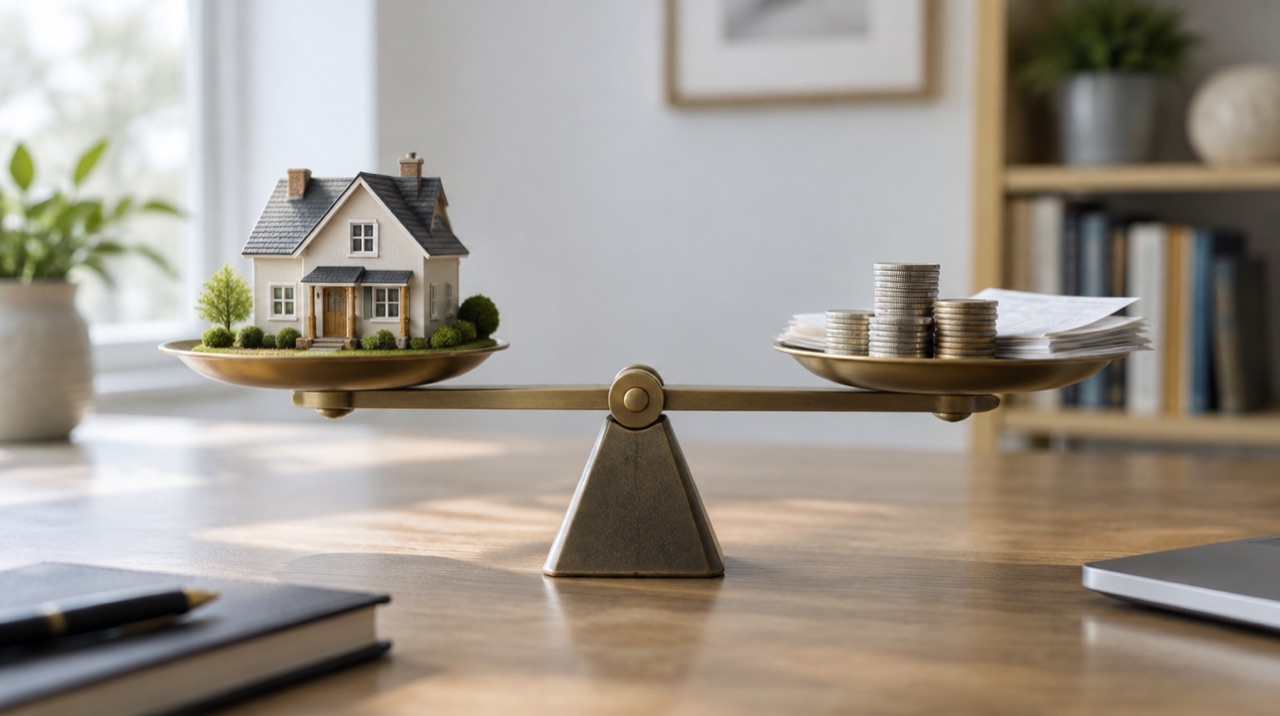
A simple test separates an asset from a liability. An asset puts money in your pocket each month. A liability takes money out. By that measure, the home you live in sits firmly in the second column, whatever its sentimental worth. Robert Kiyosaki built a book around this distinction roughly thirty years ago, and it has since sold more than forty million copies. For foreign buyers weighing a Phnom Penh purchase, the point still holds: a residence and an investment are not the same decision.
What actually counts as an asset
Picture a common scenario. A buyer takes a 200,000 dollar home on a 25 year mortgage at 8 percent, with 40,000 dollars down. The monthly payment lands near 1,235 dollars, and across the full term the repayments total far more than the sum borrowed, with interest alone exceeding the home's original price. None of that counts maintenance, management fees, or the renovations any building needs across 25 years. Those costs never reach the brochure, yet they leave the account every year.
Appreciation is the usual defence, and it is weaker than most expect. The Yale economist Robert Shiller tracked inflation adjusted US house prices back to 1890. Between 1890 and 1996 the total real return on housing was about 13 percent, close to 0.1 percent a year above inflation. Housing kept pace with the cost of living rather than building wealth. The same capital placed in a well chosen income unit earns rent instead. Gross yields in sound Phnom Penh buildings have run between 6 and 8 percent in recent years, which turns a dormant residence into a working asset.
A residence is a lifestyle commitment. An investment is a capital commitment. They deserve different tests.
The five percent test
The portfolio manager Ben Felix offers a quick rule. Multiply the home's value by 5 percent, then divide by 12. The result is the rough monthly cost of ownership that builds no equity: tax, upkeep, and the opportunity cost of capital tied up in a non yielding asset. On a 200,000 dollar home that is about 833 dollars a month. If an equivalent home rents for less, renting and investing the difference is the stronger financial move. The rule was set for Canadian conditions, so in Cambodia the figures shift with lower property tax and higher borrowing costs, but the discipline is the point.
A primary residence should be judged on space, schools, and the next twenty five years of family life. An investment should be judged on yield, fundamentals, and how easily you can exit. Trouble starts when a buyer labels a liability an asset and stops asking the questions that build wealth. We run this split with clients before they commit to a resale unit, an off plan reservation, or an auction lot, because the answer often decides which one they should buy.
Get a personal answer
Ask us anything about the Cambodian market. We answer within one business day, in English, Russian, Chinese or Spanish.
Talk to an AdvisorMarket Insights
 Strategy
Buying in a Down Market: The 2008 Lesson for Phnom Penh
Every cycle, the best entry points feel the most uncomfortable. Here is what the recovery after 2008 can teach a patient buyer looking at Phnom Penh in 2026.
 Strategy
The Patient Capital Playbook: How to Buy Through a Property Downturn
A calm, repeatable method for deploying capital in a falling market. It rests on preparation, a margin of safety, and a hold measured in years rather than months.
 Strategy
Why Cash Buyers Have the Advantage in a Soft Market
When credit tightens and confidence drains away, liquidity becomes the scarcest asset in the room. Here is how cash converts into speed, certainty, and a better price.