Market
Cambodia Condo Foreign Ownership vs the Philippines
The Philippines has let foreigners own condos since 1966, and Metro Manila still ended 2025 with a 24.7 percent vacancy rate. Set beside Cambodia's 70 percent freehold model, the comparison teaches more than the law alone.
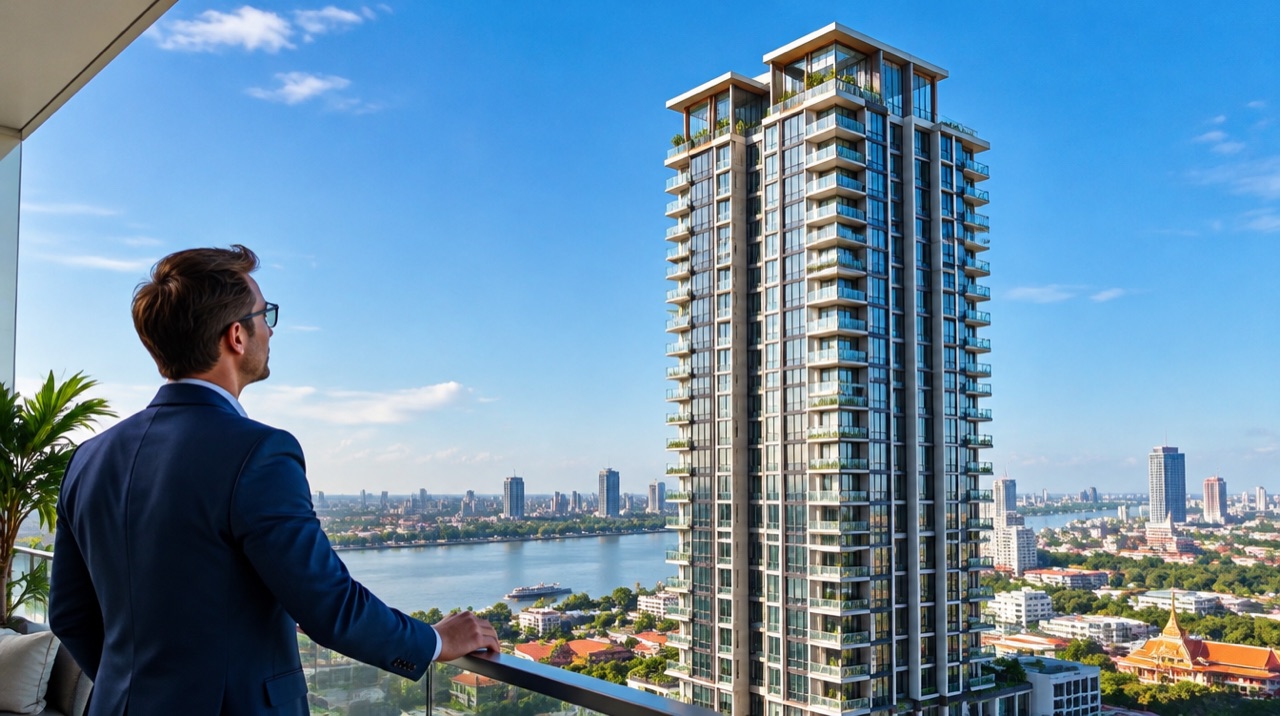
Metro Manila ended 2025 with roughly 79,200 unsold condominium units and a vacancy rate of 24.7 percent. At the middle of that year the unsold stock equaled about 13.4 years of supply at the prevailing pace of take up. The Philippines has allowed foreign condo ownership since 1966, longer than any other Southeast Asian market, which makes it the most complete case study for anyone weighing Cambodia today.
The comparison is usually made backwards, with Manila cast as the mature market and Phnom Penh as the one still arriving. Read the two frameworks side by side and Cambodia looks less like a copy and more like a simpler instrument built decades later.
Two instruments with the same name
The Philippine Condominium Act of 1966 works around a constitutional rule that reserves land for Filipino citizens and majority Filipino corporations. A condominium corporation holds the land, the buyer owns a unit plus a proportionate interest in that company, and foreign participation is capped at 40 percent of the project. A foreign buyer in Manila therefore holds two things at once, a unit and a minority share in a company that must stay 60 percent Filipino for the life of the building.
Cambodia's 2010 law on foreign ownership in co-owned buildings takes a cleaner route. Foreigners may own up to 70 percent of the private units in a building, excluding the ground floor and below, recorded as strata title in the buyer's own name. There is no intermediate corporation, no membership interest, and no domestic majority to maintain over decades of turnover. One system gives a foreigner a share in the company that owns the land. The other gives title to the space itself, and the two do not behave the same way at resale.
Where each system puts the safety net
The Philippines protects the buyer at the contract level, and has since the 1970s, through project registration and a license to sell, and through the Maceda Law's grace periods and cash surrender values for installment buyers who falter. Cambodia places its net at the funding level. A development of 30 units or more needs a license from the Real Estate Business and Pawnshop Regulator, capital thresholds are stated in the rules rather than implied, developers deposit 2 percent of construction cost or post a bank guarantee, and the 2019 Trust Law lets buyer funds sit with a licensed trustee rather than on the developer's balance sheet.
The design intent separates cleanly. The Philippine system assumes the building will be completed and asks what happens if the buyer stops paying. The Cambodian system asks what happens if the developer stops building. Both are reasonable questions, and a buyer should know which one their jurisdiction answers by statute, then arrange the other one by contract.
Legal maturity protects title, not price
Manila's oversupply built up inside one of the region's most developed legal frameworks: sixty years of condo law, a dedicated buyer protection statute, mandatory licensing, and listed developers with audited accounts. None of it produced the 24.7 percent vacancy rate, and none of it prevented one either. The dispersion inside that number is the real lesson. Bay Area vacancy runs above 50 percent while Makati, Rockwell, and Ortigas sit below 15 percent, the same law producing outcomes separated by a factor of three.
- How many units are being delivered within walking distance of yours
- On what timeline those units complete
- At what price point they are being sold
- To which end user they are actually aimed
Those questions point away from the statute book and toward the pipeline, because legal maturity protects the title and does not protect the price. That is the single most transferable lesson from Manila to Phnom Penh.
The exit, priced at entry
The Philippines spent two decades building liquidity around the condo, including a peso mortgage market and a listed REIT sector operating since 2020. Cambodia's exit is still mostly buyer to buyer, in US dollars, largely cash. That is a condition to price in rather than a defect to correct. A Cambodian holding is underwritten on yield and hold period rather than resale velocity, and the dollar denomination removes a currency translation risk that a peso collecting landlord carries on every month of rent. On friction costs, Cambodia's 20 percent capital gains tax has been deferred again, most recently to the end of 2026, with transfer tax on hard title at 4 percent, while a Philippine disposal carries 6 percent capital gains tax plus documentary stamp and local transfer charges.
Both markets settled the ownership question long ago and both answered yes. The real question before any commitment is whether the submarket can absorb what is being built beside you, at the price you were quoted, on the timeline you were promised, and that work is done before the reservation fee, not after. This is general market education rather than advice, and a short, no pressure conversation with an advisor is a good place to start.
Get a personal answer
Ask us anything about the Cambodian market. We answer within one business day, in English, Russian, Chinese or Spanish.
Talk to an AdvisorMarket Insights
 Strategy
Buying in a Down Market: The 2008 Lesson for Phnom Penh
Every cycle, the best entry points feel the most uncomfortable. Here is what the recovery after 2008 can teach a patient buyer looking at Phnom Penh in 2026.
 Strategy
The Patient Capital Playbook: How to Buy Through a Property Downturn
A calm, repeatable method for deploying capital in a falling market. It rests on preparation, a margin of safety, and a hold measured in years rather than months.
 Strategy
Why Cash Buyers Have the Advantage in a Soft Market
When credit tightens and confidence drains away, liquidity becomes the scarcest asset in the room. Here is how cash converts into speed, certainty, and a better price.