Market
Cambodia's Distressed Property Cleanup: What Buyers Should Know
Cambodia's bad loan cleanup and new asset management rules are reshaping how distressed property reaches the market, and how buyers should price it.
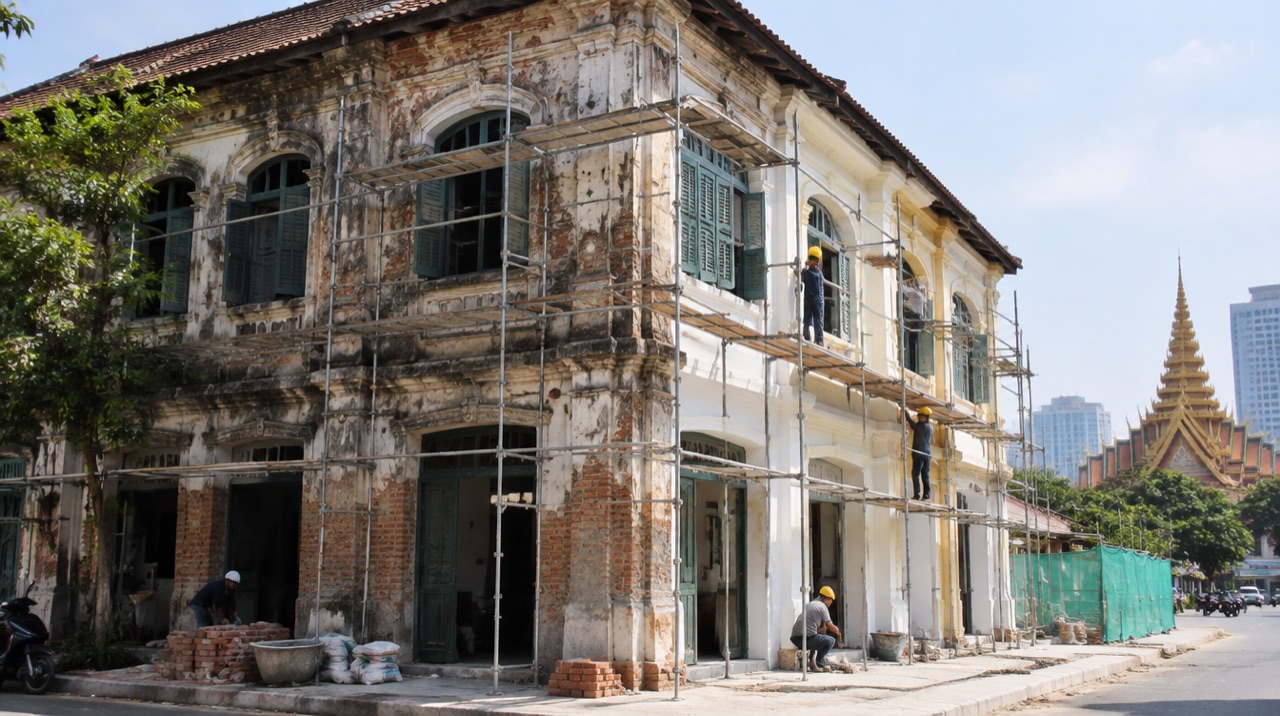
By mid 2025, Cambodian banks were carrying about 4.7 billion dollars in non performing loans, close to 8.1 percent of all lending, according to analysis from the ASEAN+3 Macroeconomic Research Office. For most readers that is a banking headline. For anyone tracking distressed property and auction stock in Phnom Penh, it is the first line of a different story, because most of those loans are secured against real estate.
From forbearance to a framework
Much of the figure reflects pandemic era loans recognised late, as a 2024 program that let banks restructure troubled loans up to twice began to wind down. On 19 February 2026 the National Bank of Cambodia went further, issuing a regulation that creates Asset Management Institutions: licensed firms allowed to buy non performing loans and the collateral behind them. The bar is set high on purpose. Each must hold 200 billion riel, around 50 million dollars, fully deposited with the central bank, run as a public limited company with independent board members, report quarterly, and keep records for ten years. They may take collateral through the courts and sell it. They may not lend.
Where distressed stock reaches buyers
When one of these institutions acquires a bad loan, it acquires the claim on the property and the standing to enforce it. Some of that stock is restructured back to health, and some is sold. That sale is the moment distressed real estate reaches the open market with clean title transfer and a documented recovery history behind it. It changes how a buyer should price the opportunity. An asset worked out through a regulated channel carries a paper trail and absorbed legal risk, so its discount is narrower than a disorderly off market deal, but you are buying a resolved position rather than inheriting an unresolved one.
A managed cleanup compresses the discount and lengthens the timeline. It does not hand out fire sale prices.
What to actually track
The instinct when bad loans rise is to wait for a steep drop. That misreads what is being built. After the Asian Financial Crisis, Indonesia, Malaysia, Korea, and Thailand each set up similar vehicles, and the markets that recovered fastest were the ones that resolved distress in an orderly way, not the ones with the deepest discounts. Confidence brings buyers back, not cheapness. So the number to watch is not the headline loan ratio. It is the pace at which these institutions are licensed and the volume of property they begin to move. We read that pipeline for clients before they commit to a distressed or auction asset.
Get a personal answer
Ask us anything about the Cambodian market. We answer within one business day, in English, Russian, Chinese or Spanish.
Talk to an AdvisorMarket Insights
 Strategy
Buying in a Down Market: The 2008 Lesson for Phnom Penh
Every cycle, the best entry points feel the most uncomfortable. Here is what the recovery after 2008 can teach a patient buyer looking at Phnom Penh in 2026.
 Strategy
The Patient Capital Playbook: How to Buy Through a Property Downturn
A calm, repeatable method for deploying capital in a falling market. It rests on preparation, a margin of safety, and a hold measured in years rather than months.
 Strategy
Why Cash Buyers Have the Advantage in a Soft Market
When credit tightens and confidence drains away, liquidity becomes the scarcest asset in the room. Here is how cash converts into speed, certainty, and a better price.