Investing
Cambodia Rental Yield in a 5% Economy
As Cambodia's growth settles toward the mid single digits, returns come from yield, not the rising tide. How a foreign buyer underwrites cash flow in 2026.
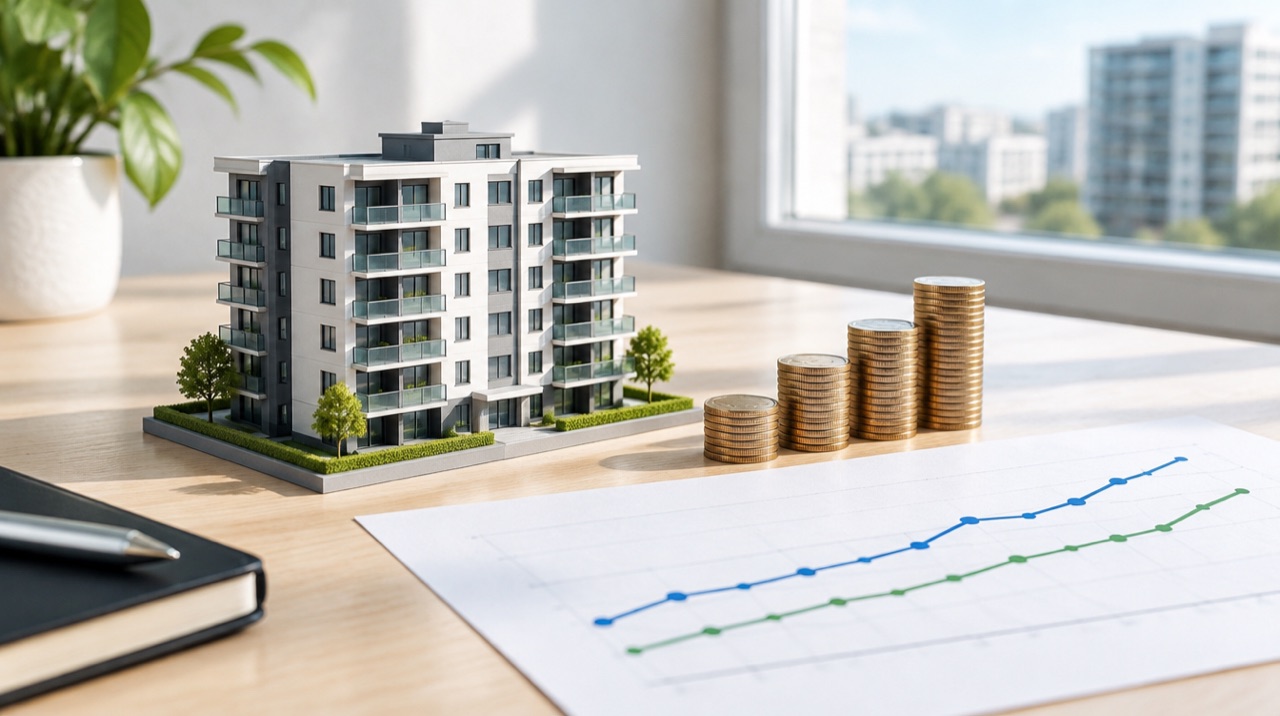
For most of two decades, Cambodia compounded at close to 7 percent a year, among the fastest rates anywhere. Forecasts for 2026 now sit lower, in the region of 4 to 5 percent, broadly in line across the institutions that track the economy. The number has moved, and the way a foreign buyer underwrites property should move with it.
A slowdown, not a stall
A step from 7 toward 5 is not a step toward zero. Projected growth stays well above the global average, which the World Bank puts near 2.6 percent for 2026, and capital is still arriving: approved investment rose sharply through 2025, foreign direct investment kept coming, and manufacturing and exports held firm. These are not the markers of a market in retreat. What changes is the kind of return on offer. The frontier decade priced in catch-up, and a rising base lifted almost everything whether or not it was well chosen. A steadier economy is simply what a maturing market looks like once the easy repricing is done.
What a growth story forgives
A growth story sells appreciation. A steadier economy pays you in yield, and that one shift explains most of what a buyer must now do differently. In a high-appreciation market, capital growth quietly subsidises weak decisions: an owner can overpay, carry a half-let building, tolerate the wrong tenant mix and still exit ahead, because the curve does the work. When the base settles, that subsidy thins. The overpayment stays an overpayment. The half-let building stays half-let. It is the arithmetic of any market graduating from frontier pricing, and it rewards the buyer who never leaned on the tide.
Underwriting for a steadier base
- Underwrite net, not gross: strip management, a realistic vacancy allowance, a sinking fund and service charges out of the quoted figure before you trust it.
- Test tenant depth: a yield is only as durable as the pool that can pay it, measured across a full cycle rather than one strong month.
- Hold the entry price: leverage has to be serviced out of net cash flow, which caps what you can responsibly pay. Discipline at entry is the return.
In the boom, the number buyers watched was the price trend. In a steadier economy it is the net yield, because that is the figure a market can no longer manufacture for you. Cleaner pricing is the opportunity, since fewer assets float on momentum and the well-chosen ones are easier to find and harder to overpay for. We underwrite buildings this way before a client commits, whether the entry is a resale unit, an off-plan reservation or an auction lot, with gross stripped to net, occupancy tested across a cycle, and the price held to what the cash flow can defend.
Get a personal answer
Ask us anything about the Cambodian market. We answer within one business day, in English, Russian, Chinese or Spanish.
Talk to an AdvisorMarket Insights
 Strategy
Buying in a Down Market: The 2008 Lesson for Phnom Penh
Every cycle, the best entry points feel the most uncomfortable. Here is what the recovery after 2008 can teach a patient buyer looking at Phnom Penh in 2026.
 Strategy
The Patient Capital Playbook: How to Buy Through a Property Downturn
A calm, repeatable method for deploying capital in a falling market. It rests on preparation, a margin of safety, and a hold measured in years rather than months.
 Strategy
Why Cash Buyers Have the Advantage in a Soft Market
When credit tightens and confidence drains away, liquidity becomes the scarcest asset in the room. Here is how cash converts into speed, certainty, and a better price.