Title & Law
Cambodia Strata Title: Why Latin Names on the Deed Matter
Cambodia now records condo owner names in Latin script as well as Khmer. Here is what the change means for foreign buyers, financing and resale.
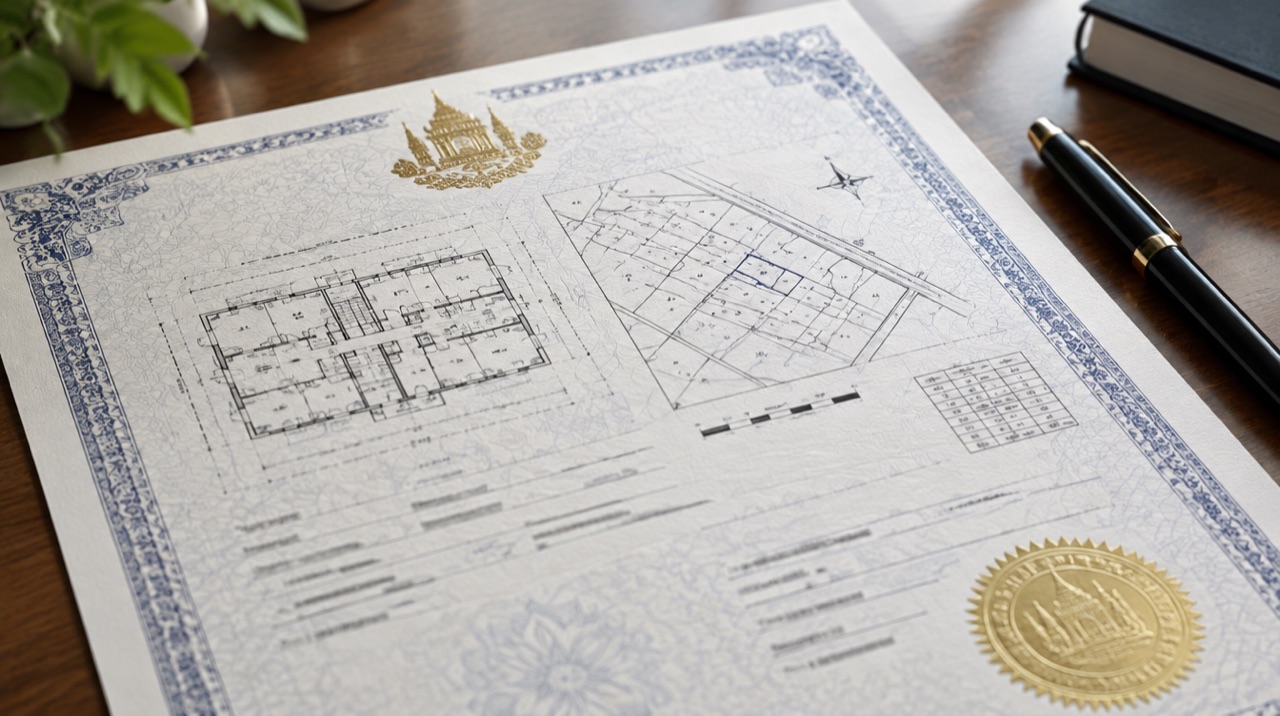
In mid 2026, Cambodia's Ministry of Land Management, Urban Planning and Construction confirmed that condominium ownership certificates can now record an owner's name in both Khmer script and the Latin alphabet. The certificate keeps its formal name and its legal force is unchanged. Only one line is different. For foreign buyers in Phnom Penh, and for anyone who expects to resell, that single line has long been one of the most important details in the file.
Why two scripts caused friction
Until this update, a foreign buyer's name could only enter the land registry transliterated into Khmer, a phonetic script in which most foreign names can be spelled several defensible ways. The name on a passport and the name on a certificate often matched in sound but not letter for letter. That was never a defect of ownership, yet every institution that later touched the asset had to reconcile two documents that did not visually agree. Banks reviewing collateral asked for confirmation letters, a lawyer at resale paused to compare deed and passport, and estates added a translation step at the worst possible moment. Each delay was small. Together they taxed every future event in the life of the property.
What foreign ownership still requires
The formatting change does not alter who can own what. Cambodia's 2010 framework for foreign ownership of units in co-owned buildings still applies in full. Foreigners may hold freehold title to individual units from the first floor upward, while ground and underground floors are excluded, and foreign ownership is capped at 70 percent of the total unit surface area in any single building. Projects within 30 kilometres of a national border sit outside the scheme. Land itself, and landed housing, cannot be owned directly by foreigners, so the strata title remains the main freehold route. Because these limits are precise, the identity of the registered owner is the anchor of the whole file, not a clerical afterthought.
A title is only as liquid as the name written on it.
What buyers and owners should do
For a prospective buyer the instruction is simple. At registration, confirm that the Latin name is recorded and that it reproduces the passport exactly, including middle names and their order. Clarity secured at signing costs nothing, while a certificate corrected during a sale costs time the seller can least afford. Owners holding older transliterated certificates should keep the original registry records alongside the passport used at purchase, since together they link the two renderings of the same name. We treat title verification as the first file we open, not the last, and we always recommend independent legal advice on your specific certificate before you commit. A registry that reads the same alphabet as a buyer's passport is what lets resale move quickly, and resale speed is decided long before the unit is listed.
Get a personal answer
Ask us anything about the Cambodian market. We answer within one business day, in English, Russian, Chinese or Spanish.
Talk to an AdvisorMarket Insights
 Strategy
Buying in a Down Market: The 2008 Lesson for Phnom Penh
Every cycle, the best entry points feel the most uncomfortable. Here is what the recovery after 2008 can teach a patient buyer looking at Phnom Penh in 2026.
 Strategy
The Patient Capital Playbook: How to Buy Through a Property Downturn
A calm, repeatable method for deploying capital in a falling market. It rests on preparation, a margin of safety, and a hold measured in years rather than months.
 Strategy
Why Cash Buyers Have the Advantage in a Soft Market
When credit tightens and confidence drains away, liquidity becomes the scarcest asset in the room. Here is how cash converts into speed, certainty, and a better price.