Investing
Off-Plan in Phnom Penh: What the Discount Really Buys
The early-buyer price on a Phnom Penh off-plan unit is not a gift. It is compensation, and whether it is fair depends entirely on the terms.
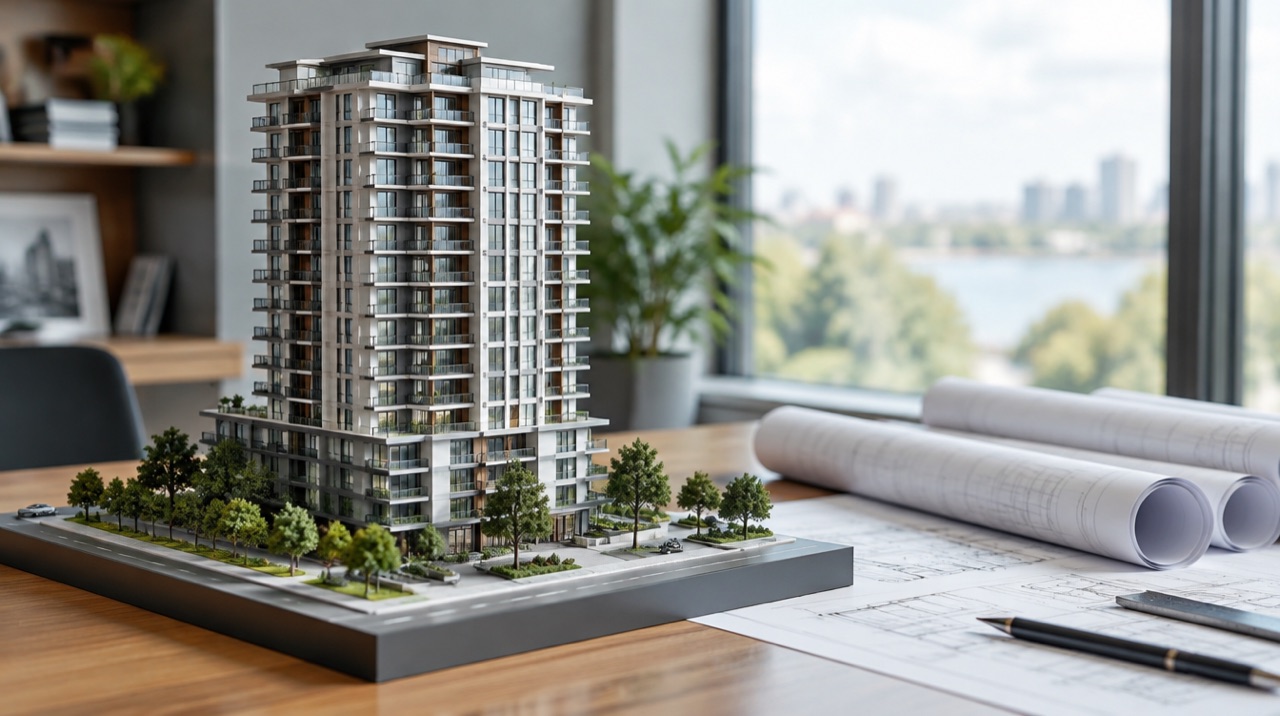
In Phnom Penh, a unit bought off-plan at the foundation stage is usually priced well below the same unit at completion, often by a quarter to a third. Retail buyers read that as a discount. We prefer to call it compensation. The developer is paying the early buyer for capital it would otherwise borrow at a higher cost, and the buyer's job is to decide whether that compensation is adequate for everything given up by committing years ahead of handover.
Why the early price exists
Developers raise money in stages, and the cheapest money they can find comes from buyers who commit before construction begins. That early capital would otherwise come from a bank at a materially higher rate, so the first units are priced below the eventual market. The same mechanism runs in Bangkok, Kuala Lumpur and Dubai. What changes between markets is the size of the gap, the reliability of the pipeline and the legal framework around delivery. The early-stage unit is not simply a cheaper version of the finished one. It is a different product, with a different risk profile and a longer time horizon.
The risks the price is paying for
- Construction risk. Projects can be delayed, redesigned or, rarely, stopped. We weigh the developer's track record and the financing behind the build.
- Time risk. Capital is committed before the asset exists, so the return has to be judged against how long the money is parked.
- Specification risk. Renderings and brochures are not the contract. The finished unit can differ in finish, layout and amenity.
- Exit risk. Before completion the only way out is to assign the contract, and the secondary market for paper-stage units is thin and uneven across projects.
The payment plan does the real work
The headline price gets the attention, but the payment schedule decides who carries the risk. Many Phnom Penh plans load most of the price across the construction period and leave only a sliver due at handover. That reads as flexibility; in practice it transfers leverage to the developer, because by completion the buyer has paid almost everything and has little bargaining power over snags or specification. We prefer a schedule that withholds a meaningful share until delivery, and we look for payments tied to verified construction milestones rather than to the calendar alone. One cost hides here too: an interest-free plan settled by dozens of cross-border transfers quietly accrues wire fees and currency spreads that never reach the brochure. Planned before the first payment, that friction can be compressed.
So is the compensation adequate? That is the question that replaces the word discount. To answer it we value what the buyer gives up: the rental income a finished unit would earn during construction, the easier liquidity of a completed asset, and the appreciation foregone while waiting. When the gap is wide and the build is short, the early buyer is often well paid. When construction is slow and resale is thin, the same headline gap can be a poor trade. We run that calculation before a client signs anything.
Get a personal answer
Ask us anything about the Cambodian market. We answer within one business day, in English, Russian, Chinese or Spanish.
Talk to an AdvisorMarket Insights
 Strategy
Buying in a Down Market: The 2008 Lesson for Phnom Penh
Every cycle, the best entry points feel the most uncomfortable. Here is what the recovery after 2008 can teach a patient buyer looking at Phnom Penh in 2026.
 Strategy
The Patient Capital Playbook: How to Buy Through a Property Downturn
A calm, repeatable method for deploying capital in a falling market. It rests on preparation, a margin of safety, and a hold measured in years rather than months.
 Strategy
Why Cash Buyers Have the Advantage in a Soft Market
When credit tightens and confidence drains away, liquidity becomes the scarcest asset in the room. Here is how cash converts into speed, certainty, and a better price.