Strategy
Positioning Before the Rebound: What to Own When Confidence Returns
Not every property recovers at the same speed. Here are the characteristics that have tended to lead when confidence returns, and why a reset is the moment to assemble them.
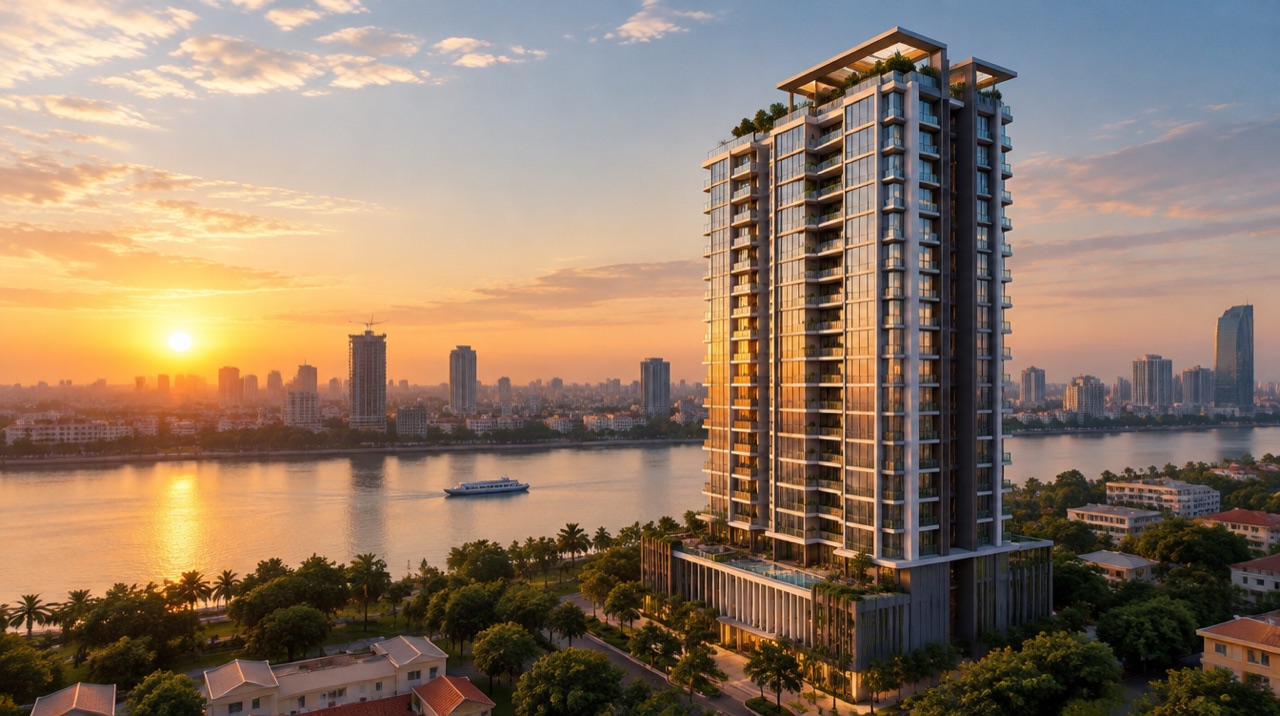
A market reset does more than lower prices. It sorts the market. When confidence drains out of a city it does not drain evenly, and when it returns it does not return evenly either. Some property climbs back quickly and sets new records within a cycle. Other property lingers near the bottom long after the headlines have turned, or never fully recovers at all. For a buyer entering during the soft phase, the real question is not simply whether to buy. It is what to own when confidence comes back.
Why recoveries are never evenly shared
In past property cycles, the return of confidence has tended to follow a fairly predictable path. Money moves first into the assets that are easiest to understand and hardest to argue with: clear ownership, a central location, buildings that are already finished and already earning. These are the holdings a cautious buyer reaches for when they are ready to re-enter but not yet ready to take on risk. Marginal stock, the half-finished tower on the edge of town, the project with a cloudy title, the oversized unit nobody quite wants, waits at the back of the queue. None of this is guaranteed to repeat, but across cycles the direction of the evidence is consistent.
This is why two buyers can enter the same market in the same month and reach the end of the decade in very different places. The discount is available to everyone during a reset. The quality of what you choose to buy with it is what separates the outcomes.
A reset discounts the whole market. A recovery does not reward it equally.
The characteristics that have tended to lead
Strip away the noise and a short list of features tends to define the property that leads a recovery rather than lags it. None of them is exotic. In a hot market they are easy to take for granted. In a soft market they are the whole game.
- Clean, independently verified title, so ownership is never the thing a future buyer has to worry about.
- A prime, central location that stays desirable through the cycle, rather than a fringe address that only worked while prices were rising.
- Ready and income-producing, so the asset earns from day one instead of costing you money to hold.
- Right-sized units that the broadest pool of tenants and future buyers actually wants, rather than oversized layouts that are hard to let and harder to sell.
- Strong, professional building management that keeps the asset well run and attractive long after handover.
Title, readiness, and the income that pays you to wait
Of these, verified title is the one never to compromise on. In a rising market buyers forgive a great deal, because nobody wants to miss out. In a soft market that forgiveness disappears, and anything ambiguous about ownership is priced harshly or simply ignored. Clean title is what keeps your asset liquid when you eventually want to sell into a recovery. In Cambodia, where foreign buyers can hold freehold strata title on up to seventy percent of a given building, insisting on properly registered, independently checked ownership is not caution for its own sake. It is the difference between an asset you can exit and one you cannot.
Readiness matters for a related reason. A finished, tenanted apartment earns from the first month, which changes the mathematics of a long hold entirely. Rental income through the soft years lowers your true cost of ownership and rewards patience directly, rather than asking you to carry an empty asset while you wait. Because the Cambodian economy is dollarised, that income and the price are both measured in dollars, so a foreign buyer is not also carrying a currency bet on top of the property decision.
Location, size, and management
Central location is the feature that ages best. Tourism and sentiment move the whole market up and down, but genuinely central, well-connected addresses tend to hold their appeal through every phase, because the reasons people want to be there, work, schools, amenities, access, do not vanish in a downturn. Size is the quieter discipline. The units that let quickly and sell easily are the ones that match how most people actually live, not the trophy layouts that only make sense at the top of a boom.
Management is the least glamorous factor and often the most decisive over a long hold. A well-run building protects the very things you are counting on, the condition, the reputation, and the rentability of your asset across the years you intend to own it. Weak management lets a good building drift, and a drifting building tends to recover last. Strong management is what lets an owner hold calmly through the soft phase and arrive at any recovery with an asset that still shows well.
Assembling the position while it is still cheap
Put these together and a strategy emerges that fits the current reset. The window to assemble a portfolio of clean-title, central, income-producing, well-managed property is widest precisely when confidence is lowest, because that is when such assets trade at prices the last peak would never have allowed. With Phnom Penh values down by roughly 30 percent from that peak, the patient buyer is not trying to catch a falling price or call the exact bottom. They are using a soft market to acquire the specific kind of property that, in past cycles, has tended to lead if and when the market turns, then holding it with the rent covering part of the cost along the way.
None of this promises a particular result. No outcome is guaranteed, timing is never certain, and past cycles are not a promise about the next one. What a disciplined buyer can control is the quality of what they own and the price they pay for it. If you would like to understand which clean-title, income-producing opportunities in central Phnom Penh suit a patient hold today, speak with an advisor and we will walk you through the current options, at your pace and with no pressure to act.
Get a personal answer
Ask us anything about the Cambodian market. We answer within one business day, in English, Russian, Chinese or Spanish.
Talk to an AdvisorMarket Insights
 Strategy
Buying in a Down Market: The 2008 Lesson for Phnom Penh
Every cycle, the best entry points feel the most uncomfortable. Here is what the recovery after 2008 can teach a patient buyer looking at Phnom Penh in 2026.
 Strategy
The Patient Capital Playbook: How to Buy Through a Property Downturn
A calm, repeatable method for deploying capital in a falling market. It rests on preparation, a margin of safety, and a hold measured in years rather than months.
 Strategy
Why Cash Buyers Have the Advantage in a Soft Market
When credit tightens and confidence drains away, liquidity becomes the scarcest asset in the room. Here is how cash converts into speed, certainty, and a better price.