Investing
Four Stages, One Order: Sequencing a Property Portfolio
Four stages build a portfolio: a home base, a cash-flow asset, an appreciation play, a legacy hold. The order matters as much as the asset you choose.
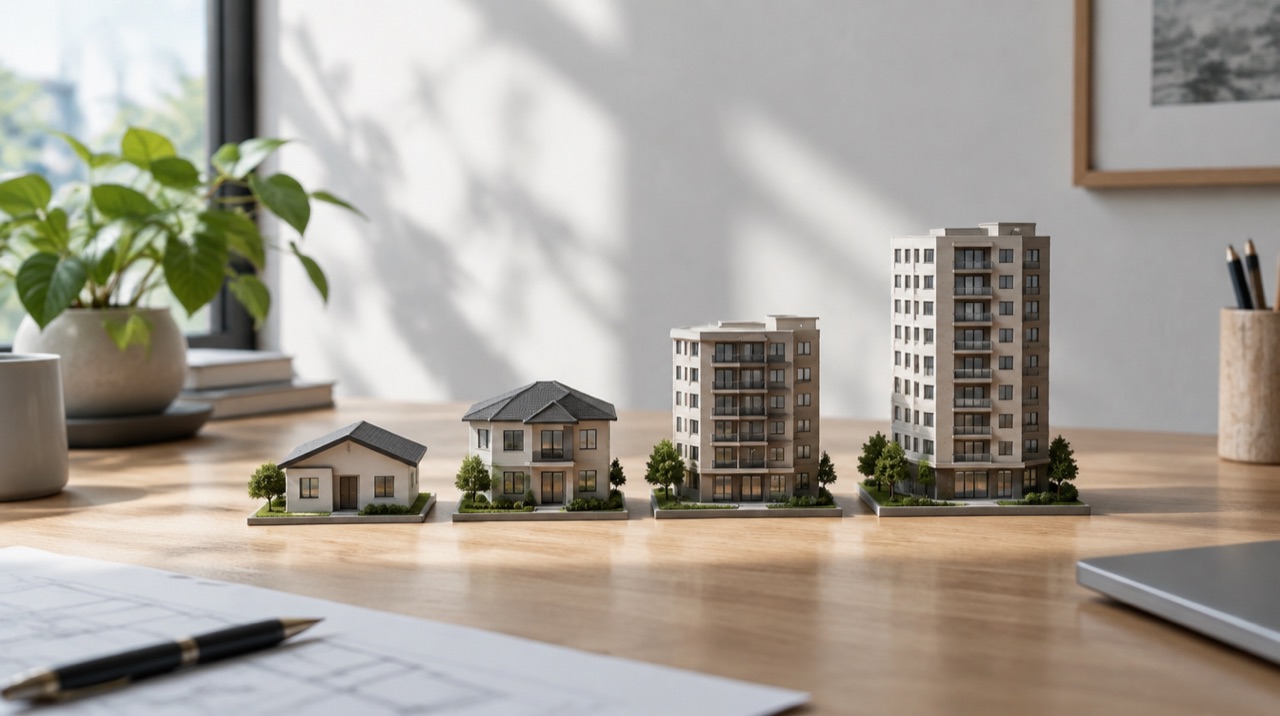
Serious property portfolios tend to be built in four stages, a home base, a cash-flow asset, an appreciation play, and a legacy hold. Most investors understand what each stage involves. Fewer notice that the order matters as much as the asset, and that building these positions out of sequence is the most common way a sound individual decision becomes a structural problem across the whole portfolio.
Sequence is architecture, not preference
Property carries friction that other assets do not. Acquisition costs run to a few percent of the price before financing, holding costs arrive every month, and exits are measured in months or years rather than hours. Each position exerts force on the others. A cash-flow asset sitting behind an appreciation play changes what that play can withstand, and a home base that was over-capitalised shrinks the room left for everything after it. Sequence is not a style choice. It is structure.
A home base, then the income engine
The home base is not an investment in the yield sense. It produces a fixed cost of shelter that belongs to the holder rather than a landlord, turning a variable cost into a known position, and for many foreign buyers that means a strata-titled condo rather than rented space. The mistake is to over-capitalise it; speculation belongs later. The cash-flow asset comes second as the portfolio's engine. Net yield, after the ten percent withholding on rental income, vacancy, management and maintenance, is what compounds, and income in a stable currency recycles into the next position faster than higher-cost markets allow.
The bet, then the legacy
The appreciation play is an asymmetric bet, an off-plan unit ahead of infrastructure, a pre-sale position ahead of a catalyst, or land ahead of rezoning. It must be held from strength, not necessity, because a position sold under pressure returns little, while the same one held through its inflection can reshape a portfolio. Acquire it only once the cash-flow asset is carrying enough of the cost. The legacy hold is what one of these positions becomes once you no longer need to sell it, and Cambodia helps here, applying no estate or inheritance tax to property.
The portfolio that works is rarely the one with the best individual assets. It is the one where each position was bought in the order that let the next be built. We put the sequencing conversation before every acquisition, because a client's next purchase, whether resale, off-plan, or an auction lot, cannot be judged without knowing what the existing portfolio already needs.
Get a personal answer
Ask us anything about the Cambodian market. We answer within one business day, in English, Russian, Chinese or Spanish.
Talk to an AdvisorMarket Insights
 Strategy
Buying in a Down Market: The 2008 Lesson for Phnom Penh
Every cycle, the best entry points feel the most uncomfortable. Here is what the recovery after 2008 can teach a patient buyer looking at Phnom Penh in 2026.
 Strategy
The Patient Capital Playbook: How to Buy Through a Property Downturn
A calm, repeatable method for deploying capital in a falling market. It rests on preparation, a margin of safety, and a hold measured in years rather than months.
 Strategy
Why Cash Buyers Have the Advantage in a Soft Market
When credit tightens and confidence drains away, liquidity becomes the scarcest asset in the room. Here is how cash converts into speed, certainty, and a better price.