Rental
The Phnom Penh Condo Furniture Package, Decoded
A developer furniture package looks like a one-time cost and behaves like a recurring one. What to pay for, what to skip, and the match that actually sets the rent.
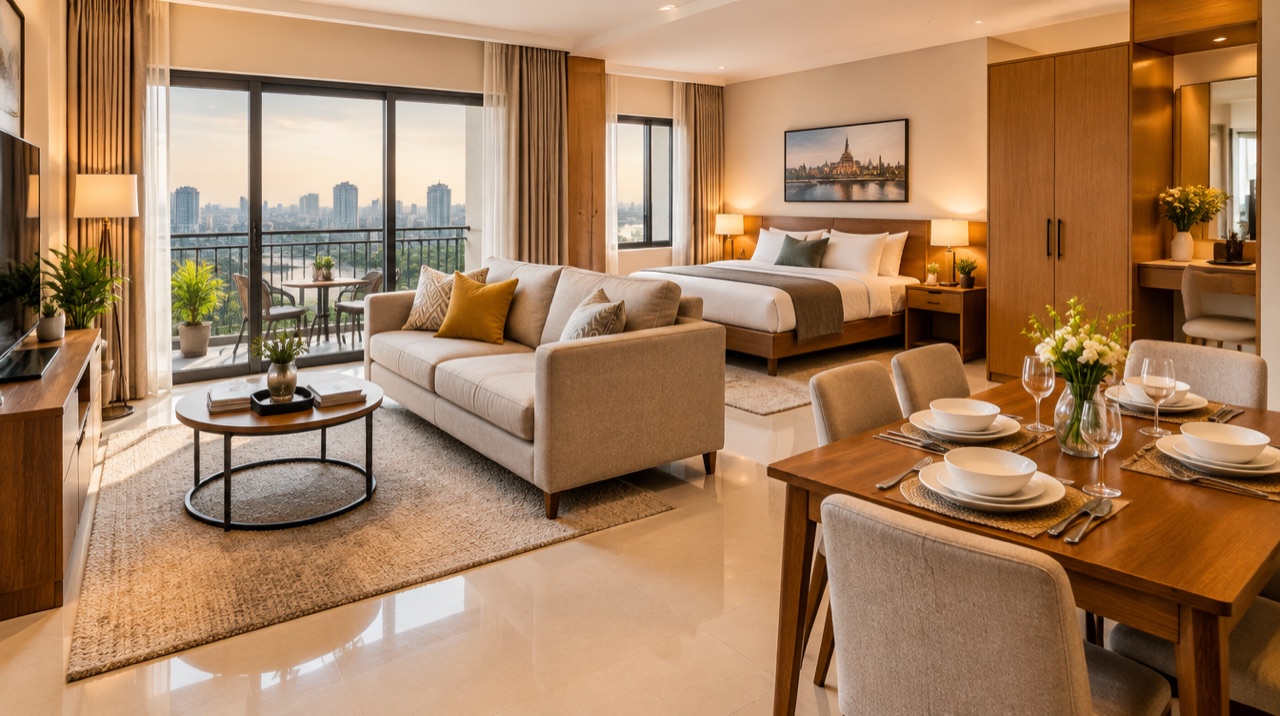
A furnished one bedroom condo in Phnom Penh usually comes with a developer furniture package priced between 5,000 and 12,000 dollars, and fitted out, the same unit rents for roughly 15 to 25 percent more than a bare shell. On paper the decision closes itself: spend once, earn the premium for years, move on.
The calculation is incomplete, and the part that gets left out is the part that matters most.
The cost nobody recalculates
Most investors price a furniture package as a one time cost. It is not. It is a recurring cost wearing the costume of a one time cost. A sofa, a mattress, a coffee table, and a set of dining chairs do not survive a decade of tenants. Soft furnishings in a rented unit reach the end of their useful life in roughly three to five years, and the television and kitchen appliances run on their own clocks. What looked like a single 9,000 dollar line on the contract is closer to a 9,000 dollar entry every few years, less the items built to last.
Read correctly, the decision stops being about taste and starts being about which items hold value, which hold tenants, and which quietly drain the return. That sorts the package into two simple groups.
What earns its place
The items worth paying for are the ones that decide whether a unit lets at all and the ones that survive turnover.
- The bed frame and a quality mattress. A tenant comparing two near identical units feels the difference within seconds, and that feeling sets the rent.
- The air conditioning, the water heater, and the kitchen hood. These are the difference between a unit that works in the Phnom Penh climate and one that generates complaints.
- A solid dining table, a real wardrobe, and proper window treatments. They are used daily, expensive to replace badly, and they read as care rather than cost cutting.
These are the working parts of the apartment, the ones a tenant uses without thinking, and they are where furniture spending converts most directly into yield. Built to a decent standard, they hold up across several tenancies.
What the markup is hiding
The second group is where developer packages earn their margin and where a disciplined investor declines. Decorative soft goods carry the heaviest markup and the shortest life: throw cushions, rugs, framed prints, vases, and the styling props from the show unit add little to the achievable rent and almost nothing to resale value, and they fade or date within two years. Consumer electronics are the other place to pause, since televisions and small appliances in a package are often priced above retail and are exactly the items a mid market tenant will happily supply. The principle is simple: pay for what holds value or holds tenants, and decline what does neither.
The regret is almost always the same
Across enough fit outs the mistakes converge on one pattern, and it is rarely buying too little. It is furnishing the wrong unit for the wrong tenant. An owner imagines living in the apartment and furnishes accordingly, but the person who signs the lease has a different budget. A 2,000 dollar package in a unit positioned for an expatriate professional reads as thin and undersells the address, while a 15,000 dollar designer fit out in a unit competing on price is capital the rent will never repay. Both are the same error pointed in opposite directions.
The other common regret is finish quality that signals the wrong tier. A laminate that chips, a frame that wobbles, a mattress that compresses. These do not announce themselves at handover. They announce themselves at the viewing eighteen months later, when a prospective tenant sits on the sofa and decides the unit is worth less than the listing asks. The package looked like a saving and became a discount applied to every future lease.
The opportunity in a furnished unit is not the furniture, it is the match between what is in the unit and who is meant to live there. Decide the tenant before the fit out and the same square metres tend to earn more. If you want a second opinion on a package before you sign, our advisors will walk it through with you, with no pressure.
Get a personal answer
Ask us anything about the Cambodian market. We answer within one business day, in English, Russian, Chinese or Spanish.
Talk to an AdvisorMarket Insights
 Strategy
Buying in a Down Market: The 2008 Lesson for Phnom Penh
Every cycle, the best entry points feel the most uncomfortable. Here is what the recovery after 2008 can teach a patient buyer looking at Phnom Penh in 2026.
 Strategy
The Patient Capital Playbook: How to Buy Through a Property Downturn
A calm, repeatable method for deploying capital in a falling market. It rests on preparation, a margin of safety, and a hold measured in years rather than months.
 Strategy
Why Cash Buyers Have the Advantage in a Soft Market
When credit tightens and confidence drains away, liquidity becomes the scarcest asset in the room. Here is how cash converts into speed, certainty, and a better price.