Market
Cambodia SME Policy and What It Signals for Phnom Penh Rental Demand
Small businesses employ most of Cambodia and pay most of Phnom Penh's rent. Why a new SME support package is really a rental-demand signal for foreign property buyers.
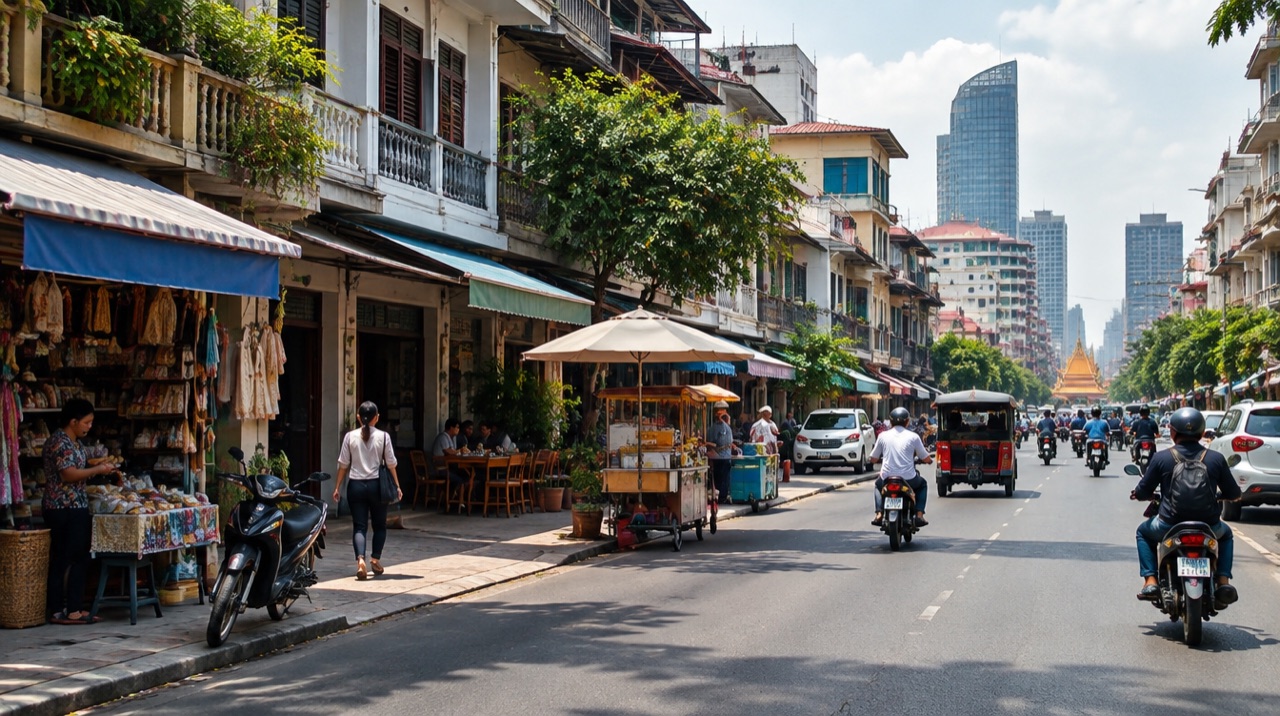
A building does not pay you rent. The people who work for Cambodia's small businesses do. That is worth holding in mind now that the government is rewriting its support package for small and medium enterprises, with the Ministry of Economy and Finance preparing the measures and inviting the businesses affected to comment before the rules are set. Most foreign buyers file this under domestic policy. It sits far closer to the rent roll than that.
The income base that pays the rent
Small and medium enterprises account for roughly 58 percent of Cambodia's GDP and a similar share of its jobs. The 2022 economic census counted more than 750,000 non-agricultural businesses, and almost all of them, about 99.8 percent, were micro, small, or medium sized. Those numbers describe where Phnom Penh's rent actually comes from.
It is easy to study the wrong thing. A buyer assessing a condominium examines the developer, the finish, the service charge, and the projected yield, and treats the building as the asset. The building is really the collateral. The asset is a claim on somebody else's payroll. A decade ago that payroll was mostly foreign, with expatriate allowances setting central rents and a tenant pool small enough to count. Today a growing share of mid-market tenants are Cambodian professionals and returning graduates working for domestic firms, and those firms are, statistically, small and medium enterprises.
Three ways the policy reaches property
The link runs through specific channels, not a vague sense that a stronger economy lifts everything.
- Podium retail. Foreigners cannot own ground-floor units, so many buyers ignore them, but the shops in a building's base decide whether the homes above read as a serviced address or an isolated tower. Those tenants are almost all small businesses.
- Formalization. A registered business produces documented payroll, and documented payroll produces tenants who can pass a landlord's income check and, in time, a lender's. Verifiable tenant income is what makes a rental market deeper and safer to underwrite.
- Import substitution. The stated aim is more domestic production and less reliance on imports. Light manufacturing and food processing locate on cheaper peri-urban corridors rather than the centre, and they carry workforce housing demand into the districts around them.
The credit rail being built quietly
There is a quieter development underneath all of this. A state-backed scheme now stands behind thousands of small-business loans, in some cases covering as much as 90 percent of the principal. Read it as a banking system teaching itself. Such support exists because lenders cannot yet price small-business risk on cash flow alone and still lean on hard collateral. Every backed loan that performs becomes a data point that makes the next one lendable without the support. Cambodian homes still trade largely on cash and developer payment plans, so mortgage depth is the single thing that would most improve resale liquidity for foreign-held units, and that depth is being assembled one working-capital loan at a time, in exactly this channel.
How a serious buyer should read it
When the measures are published, read the sector list. Whichever activities receive financing, tax relief, or easier registration will add payroll faster than the rest of the economy over the next few years, and payroll growth is where rental demand is born. The geography of that payroll tells you which districts absorb it. There is a second signal in the method itself: a government that asks the private sector before it writes the rules tends to produce policy that needs fewer abrupt corrections later, and predictability is something patient capital values above a headline number.
This fits the way investinphnompenh.com reads the current market. Phnom Penh has repriced lower, with prices off roughly 30 percent after a tourism slowdown rather than any failure of the underlying economy, and the economy is dollarised, so a foreign buyer carries no local-currency risk. In a reset like this, the quality and depth of the domestic income that rents your unit matters more than any launch-day projection.
None of this is personal financial advice, and no single policy decides an outcome. If you are weighing a Phnom Penh purchase and want to think through which districts and tenant bases look most durable, the investinphnompenh.com team is glad to talk it through, with no pressure either way.
Get a personal answer
Ask us anything about the Cambodian market. We answer within one business day, in English, Russian, Chinese or Spanish.
Talk to an AdvisorMarket Insights
 Strategy
Buying in a Down Market: The 2008 Lesson for Phnom Penh
Every cycle, the best entry points feel the most uncomfortable. Here is what the recovery after 2008 can teach a patient buyer looking at Phnom Penh in 2026.
 Strategy
The Patient Capital Playbook: How to Buy Through a Property Downturn
A calm, repeatable method for deploying capital in a falling market. It rests on preparation, a margin of safety, and a hold measured in years rather than months.
 Strategy
Why Cash Buyers Have the Advantage in a Soft Market
When credit tightens and confidence drains away, liquidity becomes the scarcest asset in the room. Here is how cash converts into speed, certainty, and a better price.