Buying Guide
Why Some Phnom Penh Condos Stay Full and Others Feel Empty
Walk the city at night and the contrast is clear. We explain how design, location, and management decide which buildings hold occupancy and value.
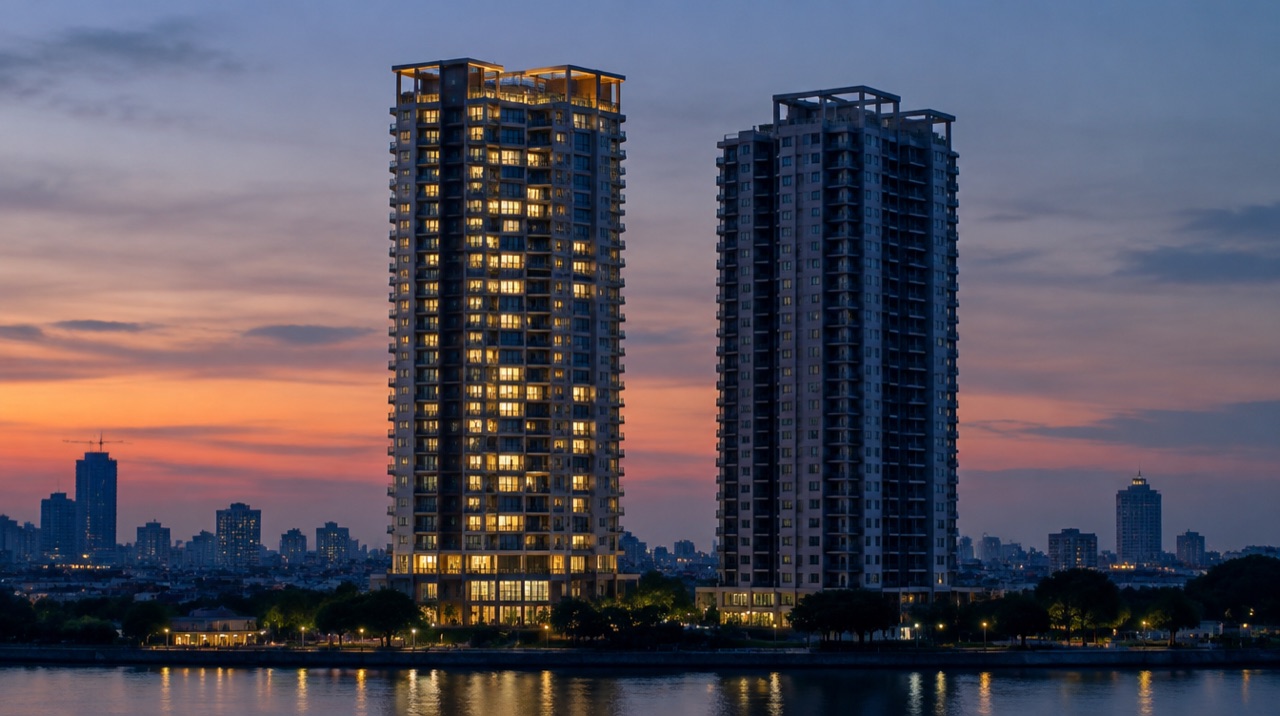
Walk through Phnom Penh in the evening and a pattern appears. Some residential towers show steady life, with lights across many floors and balconies in use. Others sit quiet, whole sections dark, shared spaces empty. The easy reading is that one building succeeded and the other failed, but the truth is rarely that simple. Occupancy here is not random. It is the result of design decisions, location, and how well a building is run as a system. For anyone buying a resale unit or an off-plan contract, learning to read that difference is most of the work.
It is rarely just the price
Price is the first explanation people reach for, and the least complete. A low price can pull early interest, but it does not keep a unit occupied. Long term residents stay for usability, not for a headline figure. A flat that is awkward to live in will shed tenants whatever the rent, and over months and years that shows up as turnover. Turnover is what quietly erodes both yield and resale value. Buildings that match how people actually live tend to hold their occupancy.
What actually holds residents
- Unit layout, including storage, natural light, and space that works day to day
- Micro location, meaning cafes, services, and walkable streets within a short radius
- Management, from cleanliness and security to quick maintenance over the long run
- Intended resident, whether the building was built for short stays or long ones
These factors compound. Two towers in the same district can perform very differently depending on their immediate surroundings and how they are run. A building managed with consistency gives residents something to rely on, which supports longer stays. One with patchy management gathers small frustrations until people leave. Design matters just as much. A tower built purely around unit count may fill quickly with investor buyers, then struggle to retain anyone, while one built around livable space absorbs more slowly but holds its occupants.
Short term activity reflects price and marketing. Long term occupancy reflects design, management, and daily life.
For a buyer, this is where real due diligence sits. Before committing, we look past the show unit and the launch discount to how the building actually functions. Who was it designed for, and does that match the tenants it will need to attract. How is it managed today, not on the brochure. Is the location genuinely connected, or merely nearby. A full building and a quiet one are not simply success and failure. They are the visible result of decisions made long before the lights were ever switched on.
Get a personal answer
Ask us anything about the Cambodian market. We answer within one business day, in English, Russian, Chinese or Spanish.
Talk to an AdvisorMarket Insights
 Strategy
Buying in a Down Market: The 2008 Lesson for Phnom Penh
Every cycle, the best entry points feel the most uncomfortable. Here is what the recovery after 2008 can teach a patient buyer looking at Phnom Penh in 2026.
 Strategy
The Patient Capital Playbook: How to Buy Through a Property Downturn
A calm, repeatable method for deploying capital in a falling market. It rests on preparation, a margin of safety, and a hold measured in years rather than months.
 Strategy
Why Cash Buyers Have the Advantage in a Soft Market
When credit tightens and confidence drains away, liquidity becomes the scarcest asset in the room. Here is how cash converts into speed, certainty, and a better price.